Wasp and Hornet Removal in Glen Ellyn, IL
Yellowjackets coming out of the lawn or a wall, a gray hornet nest in a tree, paper wasps under the eaves. Do not plug the hole. Call (630) 000-0000 and say where the nest is. A local technician identifies it, treats it safely and quotes first.
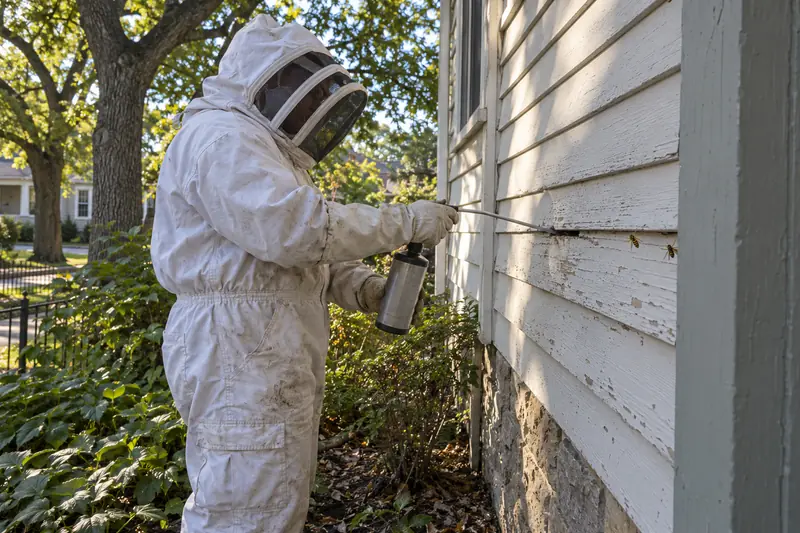
By August, yellowjacket nests in Glen Ellyn lawns and wall voids can hold thousands of wasps, bald-faced hornets hang gray paper nests in the old trees, and paper wasps build under every porch ceiling. The technician identifies the nest and treats it safely, with the right gear.
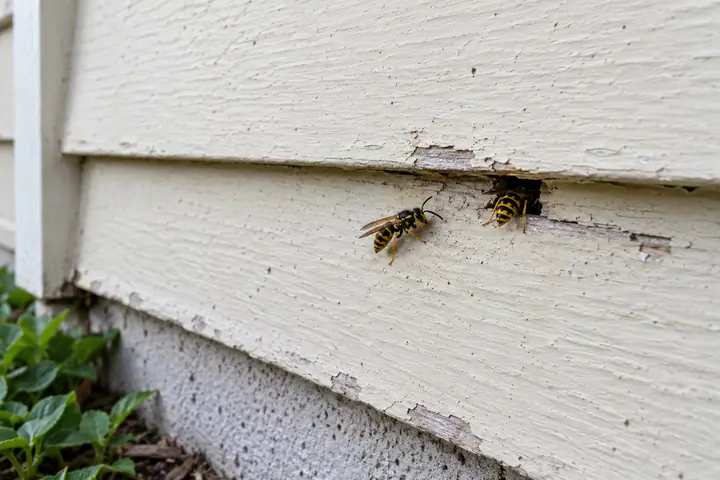
Yellowjackets are the dangerous ones. They nest in the ground, in wall voids and under decks, defend the nest hard and sting repeatedly. Mowing over a ground nest or sealing a wall hole from outside can send them into the house. Bald-faced hornets build football-sized nests in trees and shrubs. Paper wasps make small, open umbrella-shaped nests under eaves and railings and are calmer unless disturbed.
Which wasp is it
| Insect | Nest | Where | How it behaves |
|---|---|---|---|
| Yellowjacket | Hidden paper nest | In the ground, wall voids, under decks | Defends the nest hard, stings repeatedly |
| Bald-faced hornet | Gray football-shaped nest | Trees, shrubs, eaves | Aggressive near the nest |
| Paper wasp | Open umbrella-shaped comb | Under eaves, railings, playsets | Calmer unless disturbed |
| Cicada killer | Single burrows with a mound of soil | Sandy lawn edges, sidewalks | Large but rarely stings people |
| Mud dauber | Tubes of mud | Garages, sheds, porch ceilings | Seldom stings |
| Honeybee | Wax comb | Hollow trees, wall voids | Referred to a beekeeper |
Yellowjackets in walls and lawns
Yellowjackets are the dangerous ones. They nest in the ground, in wall voids and under decks, defend the nest hard and sting repeatedly. By August a single nest can hold thousands of workers. Mowing over a ground nest can bring hundreds out at once, and sealing a wall hole from outside can send them through the ceiling or around a light fixture into the house.
Do not plug the hole. Keep children and pets away, note where the wasps go in and call.
How a nest is handled
- 01
Identify the insect and the nest
Yellowjackets, hornets, paper wasps or honeybees each need a different approach.
- 02
Treat the nest
Dust or foam into ground and wall nests, direct treatment for exposed nests, timed for when the colony is inside.
- 03
Remove where reachable
Exposed nests are taken down once the colony is dead. Wall nests usually stay sealed in the wall.
- 04
Advise on the wall
Wall openings are sealed only after the colony is gone, so wasps are not forced indoors.
The technician wears a bee suit and veil for nests that are large or hard to reach, and uses long-reach tools for nests under high eaves, so ladders are not climbed into a swarm.
Why wasps get worse in late summer
In spring, each nest starts with a single queen. Through June and July the colony grows, and by August and September the nests are at their largest and the workers start looking for sugar instead of protein. That is when yellowjackets crowd around trash cans, drinks and picnic tables, and when most stings happen. A nest found early is smaller and easier to treat.
Playsets, decks and eaves
In August and September, paper wasp nests turn up under porch ceilings, eaves and deck railings, and inside the hollow tubes and corners of backyard playsets and swing sets. Nests in a playset are the ones children find first, so they are treated and removed as soon as they are spotted. Under decks, yellowjackets often nest in the soil between the joists, out of sight until someone steps near.
Honeybees
Honeybees are not treated here. A honeybee swarm or colony in a wall should go to a beekeeper or a bee removal service that can relocate it. If you are not sure whether you have bees or wasps, describe them on the call: honeybees are fuzzy and golden brown, yellowjackets are smooth and bright yellow and black.
Stings and allergies
If anyone in the house is allergic to stings, keep them indoors and away from the nest until it has been treated, and follow the plan their doctor has given them. Anyone with trouble breathing or swelling of the face or throat after a sting needs medical help right away; call 911.
What changes the price of wasp control
- The type of wasp Yellowjackets in a wall take more than a paper wasp nest.
- How many nests Several nests are often found on the same visit.
- How hard they are to reach A wall void or a nest high in a tree takes more time.
You hear the price before the treatment. Late summer is also mosquito season, covered on mosquito and tick control, and every other service is on pest control in Glen Ellyn.
Preventing nests next year
- Look early Small paper wasp nests in May and June are easy to deal with.
- Seal gaps in siding and soffits After the colony is gone, not while it is active.
- Check playsets in spring The hollow tubes and corners are where queens start nests.
- Keep lids on trash and recycling Late-summer yellowjackets come for sugar.
Wasp control questions
Can I spray the nest myself?
Small paper wasp nests, maybe. Yellowjacket ground and wall nests are a different matter: disturbing them can bring hundreds of stinging wasps out at once.
When is the best time to treat?
Early in summer, when nests are small. Treatment is done when the colony is inside, usually early morning or evening.
How soon do the wasps stop?
Most activity stops within a day. Some returning foragers may circle for another day or two.
Will the nest come back next year?
Wasps do not reuse old nests, but new queens may build in the same sheltered spot. Sealing the gap afterwards helps.
There are wasps in my kids' playset. What should I do?
Keep the children away and call. Playset nests are treated and taken down once the colony is dead.
Good boundaries. Better living.
Call now(630) 000-0000Mon to Fri 8am to 7pm, Sat 9am to 3pm (Central time). A person answers, asks what you are seeing and where, then sets up a visit with an independent local exterminator who works your part of DuPage County.