Ant Control in Glen Ellyn, IL
Big black ants on the kitchen floor at night, sawdust under a window frame, a trail of small ants after spring rain. Call (630) 000-0000 and say where you see them. A local exterminator finds which ant it is and where it nests, and quotes before anything is treated.
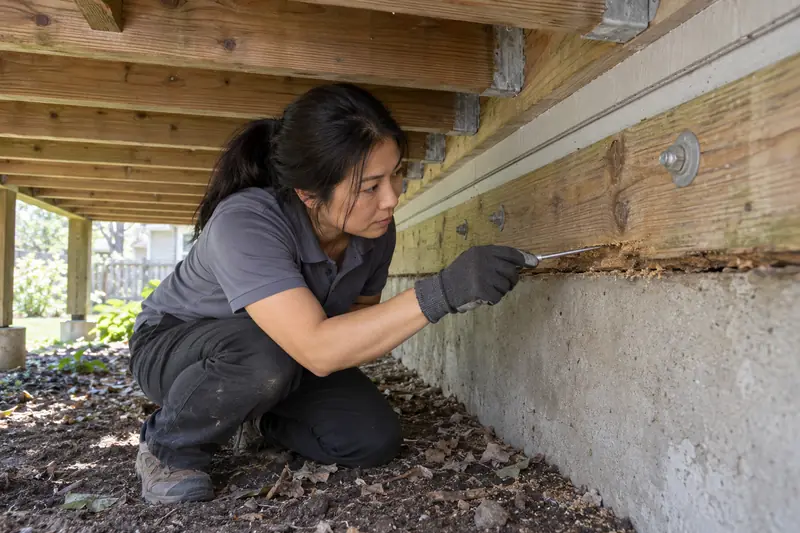
Glen Ellyn is carpenter ant country. The old oaks and maples, wooden porches, decks and window frames give them damp wood to nest in, and they start showing up indoors in April. Smaller ants, mostly odorous house ants, trail into kitchens after spring rain.
Carpenter ants do not eat wood. They tunnel through it to make nests, pushing out piles of fine sawdust called frass. A main nest often sits outdoors in a tree, stump or old landscape timber, with satellite nests in the house where wood stays damp: around a leaking window, under a bathroom, in a porch roof or a deck ledger.
Which ants show up in Glen Ellyn homes
| Ant | What it looks like | Where you see it | What it usually means |
|---|---|---|---|
| Carpenter ant | Large, black or black and red, pinched waist | Kitchens and bathrooms at night, spring | A nest in damp wood in or near the house |
| Odorous house ant | Small, dark brown, smells like rotten coconut when crushed | Trails to sweets and water after rain | Colonies outdoors under mulch and stones, moving in |
| Pavement ant | Small, dark, grooved head | Sand piles along slab cracks and patios | Nests under the basement slab or the driveway |
| Acrobat ant | Small, heart-shaped abdomen held up | Around damp window frames and siding | Nests in wood already softened by moisture |
| Field ant | Medium, brown or red and black | Mounds in the lawn and trail edges | Outdoor ants that rarely come inside |
The kind of ant decides the treatment. Carpenter ants are found and treated at the nest; odorous house ants and pavement ants are controlled with bait where they feed. Spraying the ants you can see works for none of them.
Signs of carpenter ants
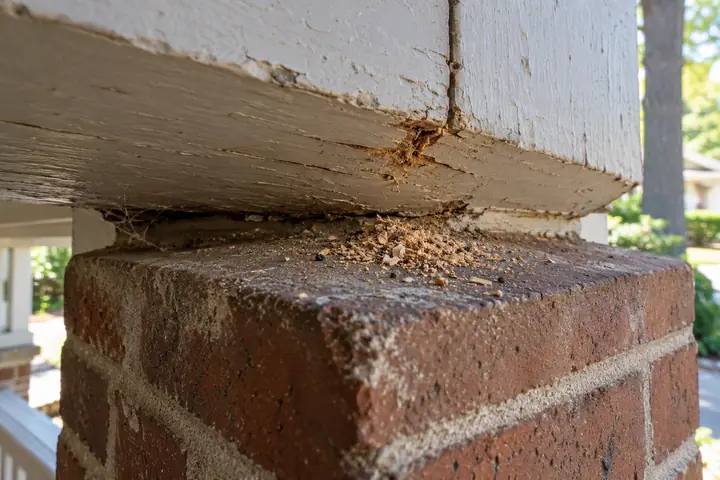
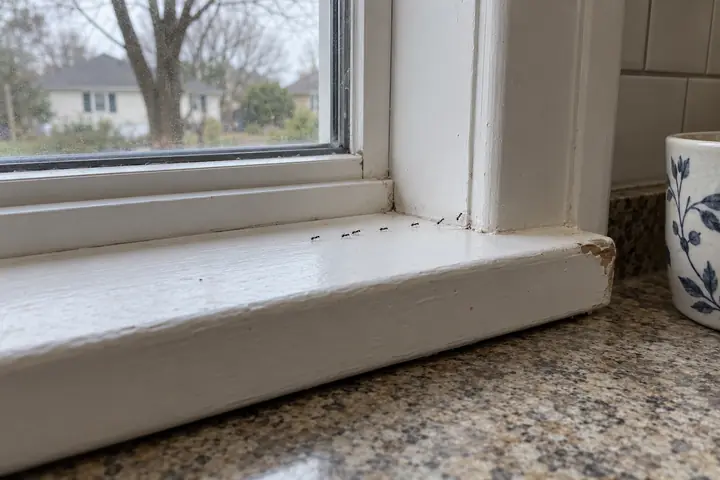
- Large black ants indoors Especially at night and in spring, often in the kitchen or bathroom.
- Sawdust piles Fine shavings mixed with insect parts below trim, window frames or in the basement.
- Winged ants inside Swarmers in late winter or spring mean a nest inside the structure.
- Rustling A faint sound in walls or ceilings where a large nest is active.
Why carpenter ants nest in Glen Ellyn houses
Old trees close to the roof
The oaks and maples that shade Glen Ellyn's older streets often hold the main colony in a hollow limb or an old stump. Branches touching the roof and wires running from trees to the house give the workers a bridge to the attic, the soffits and the fascia.
Damp wood from gutters, porches and windows
Carpenter ants prefer wood that is already damp. A gutter that overflows onto the fascia, a porch roof that leaks, a window frame that stays wet or a deck ledger that never dries gives them a place to start a satellite nest inside the house.
Firewood, stumps and landscape timbers
Firewood stacked against the wall, old railroad ties and landscape timbers, and stumps left from tree removal are all places a colony can live a few feet from the foundation.
How ant control is done
- 01
Identify the ant
Carpenter ants, odorous house ants and pavement ants need different treatments.
- 02
Find the nest
The technician follows trails at night or early morning and checks damp wood, porches and trees near the house.
- 03
Treat the nest and the trails
Dust or foam into the nest gallery where it can be reached, a non-repellent treatment at entry points and bait where they feed.
- 04
Fix the conditions
Branches touching the roof, wood touching soil and leaks that keep wood wet are pointed out.
- 05
Follow up
A second look a few weeks later confirms the colony is gone.
Bait or spray: matching the treatment to the ant
Repellent sprays make ants scatter and split into new colonies, which is why a kitchen sprayed with a store product often has more ants a week later. Baits and non-repellent products work the other way: the workers carry them back to the colony and share them, so the queen and the brood are reached without anyone finding the nest. For carpenter ants, direct treatment of the nest gallery is added wherever the nest can be found, because a large colony can take a long time to reach with bait alone.
Odorous house ants and pavement ants
Odorous house ants after spring rain
These small brown ants trail into Glen Ellyn kitchens when spring rain floods their outdoor nests under mulch, stones and patio pavers. They look for sweets and water, and they come back along the same trail. Gel and liquid baits placed along the trail, plus a treatment where the trail enters the house, usually end it within a couple of weeks.
Pavement ants through the basement floor
Pavement ants push little piles of sand up through basement floor cracks and along driveway and patio joints. In older homes with settled slabs they come up indoors in spring. Bait placed where they feed works better than spraying, and sealing the cracks keeps the next colony out.
Carpenter ants or termites?
Both swarm in spring, and both can damage wood. Carpenter ants have a pinched waist and bent antennae and leave sawdust; termites have a straight waist, straight antennae and leave mud. If you are not sure which you have, save a few in a sealed bag. The difference, and how termites are handled, is on termite treatment.
What changes the price of ant control
- Which ant it is Carpenter ants take more work than odorous house ants.
- How many nests A single satellite nest or several, inside or outside.
- Where the nest is An open porch beam is simpler than a wall void.
- Follow-up Whether a second visit is part of the plan.
You hear the price before any treatment. Every other service, from rodents to termites, is on pest control in Glen Ellyn.
Keeping ants out
- Trim branches back from the roof A clear gap of a few feet takes away the bridge.
- Fix leaks that keep wood damp Gutters, porch roofs, window frames and decks.
- Move firewood away from the house Off the ground and away from the walls.
- Pull mulch back from the foundation A few inches of bare soil or stone at the wall.
Ant control questions
Do carpenter ants eat wood?
No, they hollow it out to nest. Over years a large colony can weaken porch framing, window frames or a deck.
Will spraying the ants I see help?
It kills a few workers and leaves the nest. Treating the nest and using bait where they feed is what ends it.
Why do I see ants in winter?
Carpenter ants active indoors in winter usually mean a nest inside the warm part of the house.
How long does ant treatment take to work?
Bait usually takes one to two weeks, because the workers have to carry it back. Carpenter ant nests treated directly quiet down faster.
Is an ant exterminator the same as pest control?
Yes. The same technician identifies the ant, finds the nest and treats it.
Good boundaries. Better living.
Call now(630) 000-0000Mon to Fri 8am to 7pm, Sat 9am to 3pm (Central time). A person answers, asks what you are seeing and where, then sets up a visit with an independent local exterminator who works your part of DuPage County.