Pest Control in Glen Ellyn, IL
Winged insects in the basement in May, carpenter ants on the porch, mice behind the stove once the nights freeze. Call and describe what you are seeing. A local exterminator inspects first, names the pest and gives you the price before anything is treated.
Calls answered Mon to Fri 8am to 7pm, Sat 9am to 3pm (Central time)
- Inspection firstThe pest and the way in are found before any treatment is chosen.
- Price before workYou hear the cost for your home before work starts.
- Built for old housesPorches, fieldstone foundations, full basements and the oaks around them.
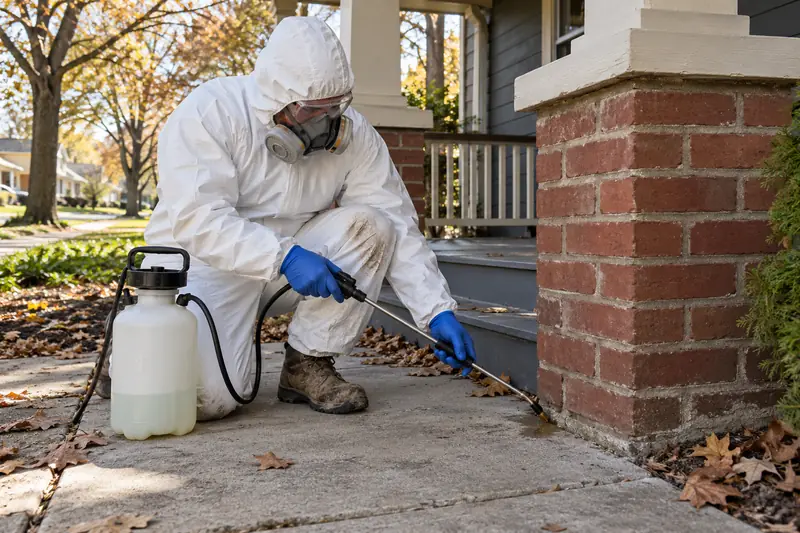
Pest control in Glen Ellyn old trees, old houses, four real seasons
Glen Ellyn's pest problems come from the same things that make it a nice place to live. The old oaks and maples drop limbs and hold moisture that carpenter ants love. The early 1900s houses near downtown have deep wooden porches, additions and sills that sit close to the soil, which is where eastern subterranean termites find their way in. Full basements with fieldstone or block foundations give mice a hundred ways inside once the nights drop below freezing.
Then the seasons take turns. Termites and carpenter ants swarm in spring. Mosquitoes and ticks own the summer along Lake Ellyn, the East Branch of the DuPage River and the Illinois Prairie Path. Yellowjackets peak in August. Mice, boxelder bugs and lady beetles move indoors in fall. A good exterminator here plans for the whole year, not just the pest in front of them.
That is why every visit starts with an inspection. The technician walks the outside of the house first, from the porch and the foundation to the window wells, the sill plate and the gaps where utility lines come in. Inside, they check the basement, the kitchen and, for mice or wasps, the attic. Then they tell you what the pest is, how it gets in and what will actually stop it.
Everything is on this page: the signs that mean it is time to call, each service and how it is done, what pest control costs in Glen Ellyn, the local pest calendar, the towns and neighborhoods served, how to prepare and common questions.
- Call hours
- Mon to Fri 8am to 7pm, Sat 9am to 3pm, Central time.
- What is treated
- Termites, carpenter ants and other ants, mice and rats, mosquitoes and ticks, wasps and hornets, spiders and seasonal invaders.
- Who comes out
- An independent local exterminator who works Glen Ellyn and the DuPage County towns around it.
- Not handled
- Squirrels, raccoons, bats and other wildlife, and honeybee colony removal.
Signs it is time to call and what they usually mean in Glen Ellyn
Pick the one that matches what you are seeing to jump to the service that handles it.
- Winged insects in the basement or near a window in April or MayA termite swarm, or carpenter ants swarming at the same time. The wings tell them apart.
- Mud tubes on the foundation wall or a basement sillEastern subterranean termites traveling from the soil to wood.
- Large black ants on the porch, deck or kitchen floorCarpenter ants nesting in damp or damaged wood nearby.
- Small brown ants on the counter after spring rainOdorous house ants, which smell like rotten coconut when crushed.
- Droppings in the basement, pantry or kitchen drawersMice that came in as the nights got cold.
- Scratching in the walls or ceiling after darkMice in the walls, or squirrels in the attic. The timing tells which.
- Mosquitoes on the deck from June on, ticks after a walkBreeding water nearby and tall grass at the yard edge.
- A paper nest under the eaves, wasps out of a hole in the lawnPaper wasps, bald-faced hornets or ground-nesting yellowjackets.
- Beetles and bugs on the sunny side of the house in fallBoxelder bugs, lady beetles or stink bugs looking for a way into the walls.
- Pests in a restaurant, shop, office or apartment buildingA scheduled plan and a written service record are needed.
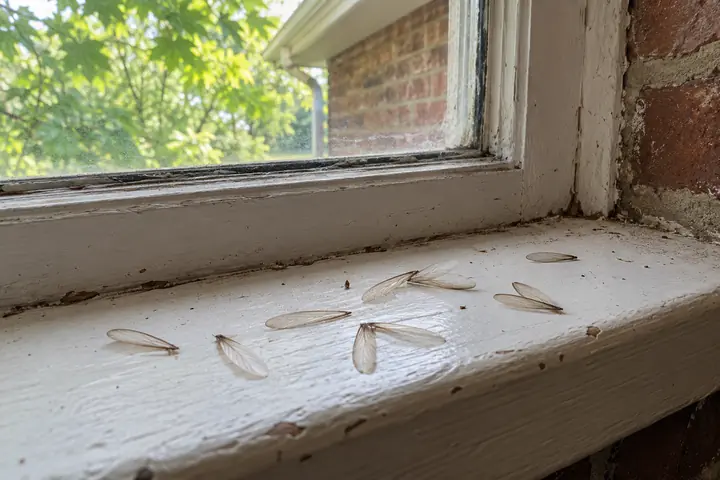
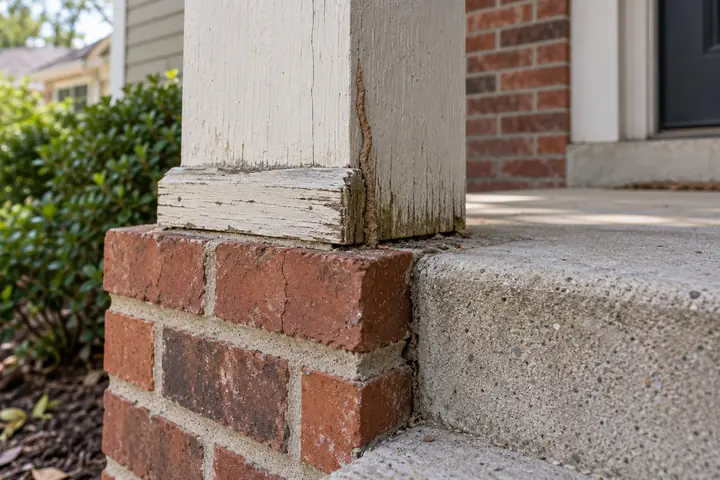
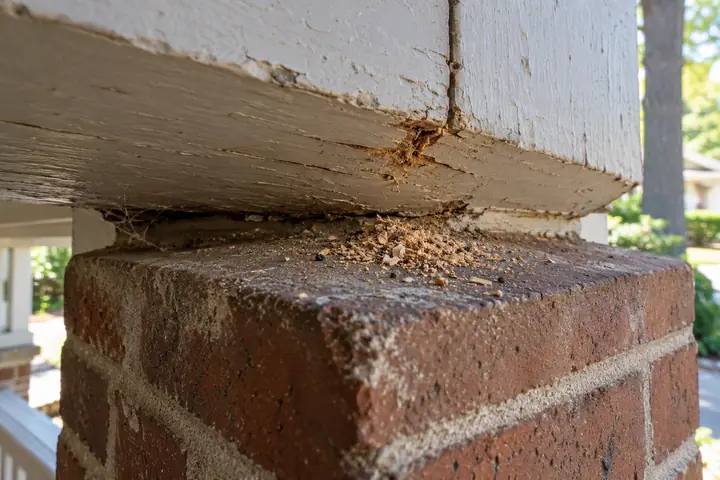
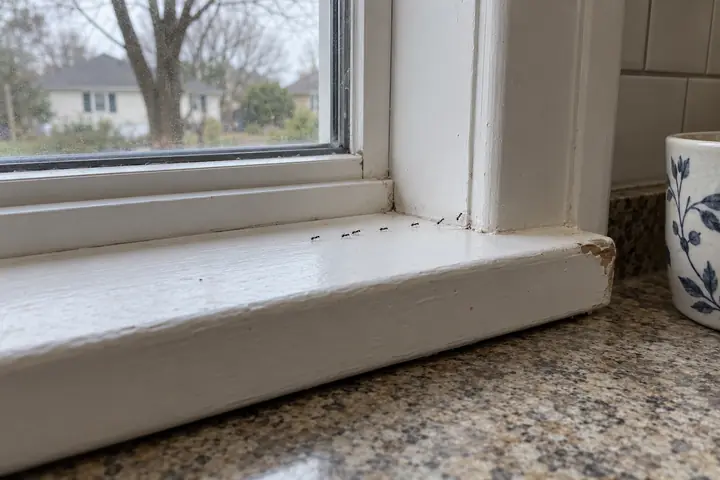
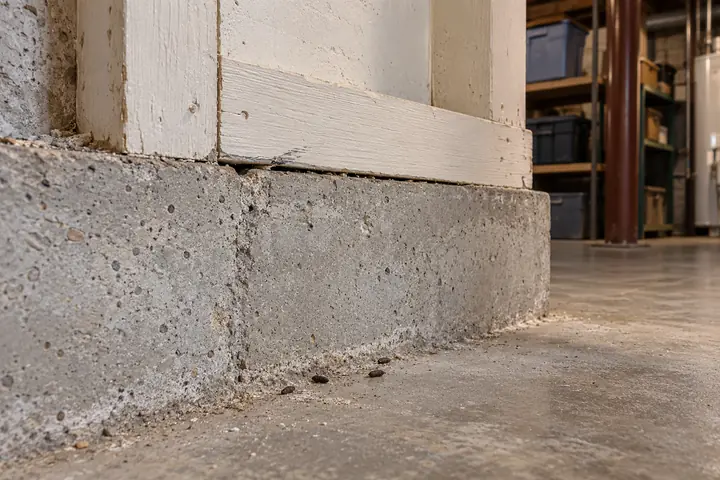
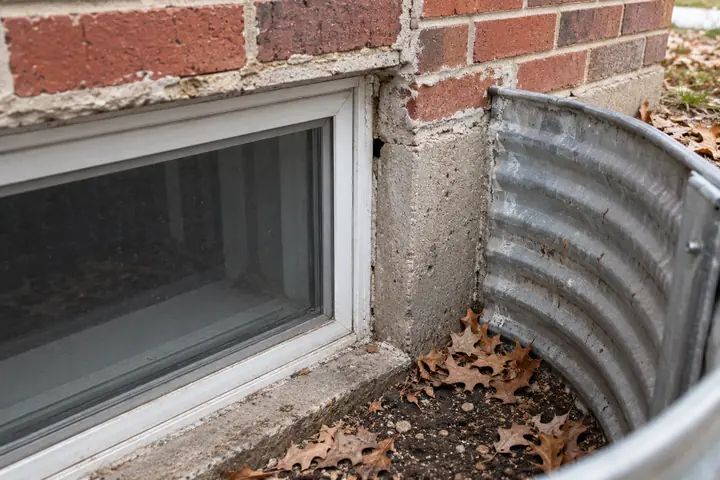
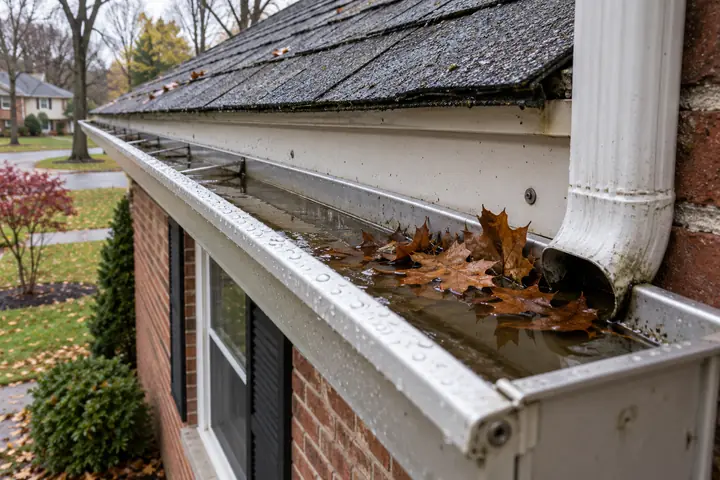
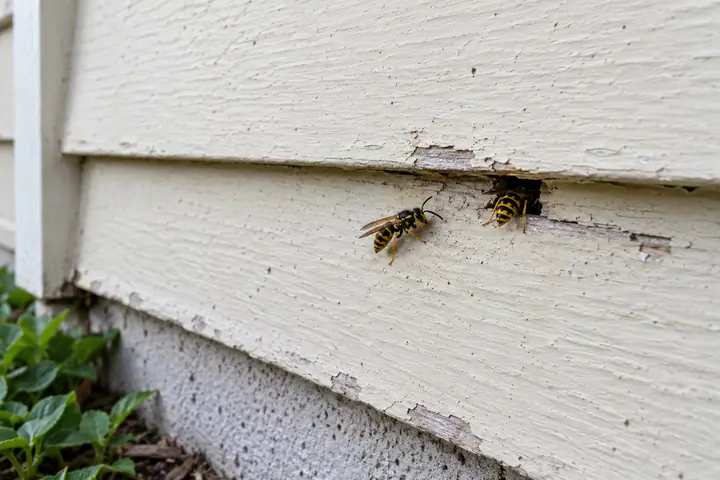
Not sure what it is? Take a clear photo, or put a few insects in a sealed bag or jar, and mention it when you call. Wings, droppings and the time of year say a lot.
Pest control services in Glen Ellyn one inspection, the right treatment
Seven services cover nearly every pest call in Glen Ellyn. Each one is laid out in full below: the signs, what the exterminator does, the options and what changes the price.
Most homes need one of these at a time. The inspection decides which. When two problems show up together, such as carpenter ants and a termite swarm in the same week, the technician sorts out which insect is which before anything is treated.
- 01General pest controlSpiders, centipedes, crickets, silverfish and the boxelder bugs, lady beetles and stink bugs that move in every fall.
- 02Termite treatment and inspectionEastern subterranean termites inspected, confirmed and treated with a soil barrier or bait system, plus inspections for home sales.
- 03Ant controlCarpenter ants traced to the nest in damp wood, and odorous house ants baited where they feed.
- 04Rodent controlMice and rats removed from basements, walls and garages, then the gaps they use are sealed for good.
- 05Mosquito and tick controlYard treatments every few weeks from spring to fall, aimed where mosquitoes rest and ticks wait.
- 06Wasp, hornet and yellowjacket removalPaper wasps, bald-faced hornets and ground or wall yellowjackets identified and treated safely. Honeybees are referred.
- 07Commercial pest controlRestaurants, shops, offices and apartment buildings, on a schedule, with a written record of every visit.
General pest control in Glen Ellyn
General pest control handles the everyday pests of a DuPage County house: wolf spiders and house centipedes in the basement, crickets and silverfish, and the fall invaders that cover the sunny side of the house in October.
Call about pests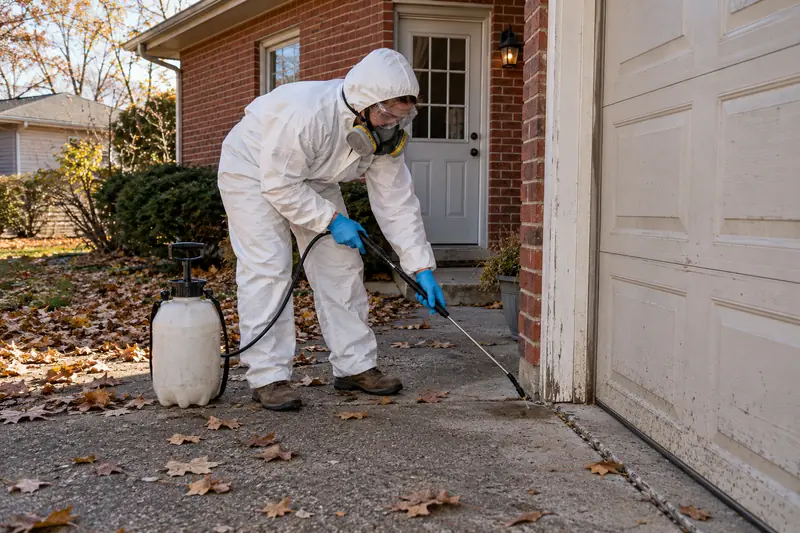
Glen Ellyn basements are where most of these pests live. Damp corners, floor drains and stored boxes give centipedes, silverfish and spiders food and cover. Outside, mulch beds and leaf litter under the old trees keep crickets, millipedes and beetles right against the foundation.
What a general service covers
- Foundation line A targeted band along the foundation, window wells and door thresholds, where crawling pests enter.
- Entry points Gaps at the sill plate, dryer vents, utility lines and garage door seals noted, with simple fixes explained.
- Basement Baits and dusts in cracks, along the sill, behind the water heater and near floor drains, not sprayed across the floor.
- Webs and nests Spider webs and egg sacs cleared from window wells, eaves and the garage.
Fall invaders
Boxelder bugs, multicolored Asian lady beetles and brown marmorated stink bugs gather on warm, south and west facing walls in late September and October, then slip into wall voids and attics to spend the winter. They do not breed indoors, but they show up on windows all winter on sunny days.
The fix is timing. A treatment on the outside walls and around windows, soffits and vents in early fall, before they move in, does far more than anything done in January. Sealing gaps around window frames and siding helps the following year.
One visit or ongoing
A single visit handles a current problem. Homes that back onto forest preserves, the Prairie Path or heavy landscaping usually do better with quarterly service timed to the seasons. The technician recommends one after looking at the property, and you choose.
Are house centipedes dangerous?
No. They eat other insects, which is why they show up where silverfish, crickets and spiders live. Reducing moisture in the basement and the insects they feed on reduces the centipedes.
Why do lady beetles come back every fall?
They gather on the same warm walls each year. A fall treatment on the outside of the house and sealing the gaps they use cuts the numbers.
Basement full of spiders and centipedes? Call and say where you see them most.
Call now(630) 000-0000Termite treatment and inspection in Glen Ellyn
Eastern subterranean termites are active across DuPage County. They live in the soil and reach a house through the foundation, a porch, an addition or any wood that touches the ground. The first job is confirming them, because carpenter ants swarm in the same weeks.
Call about termites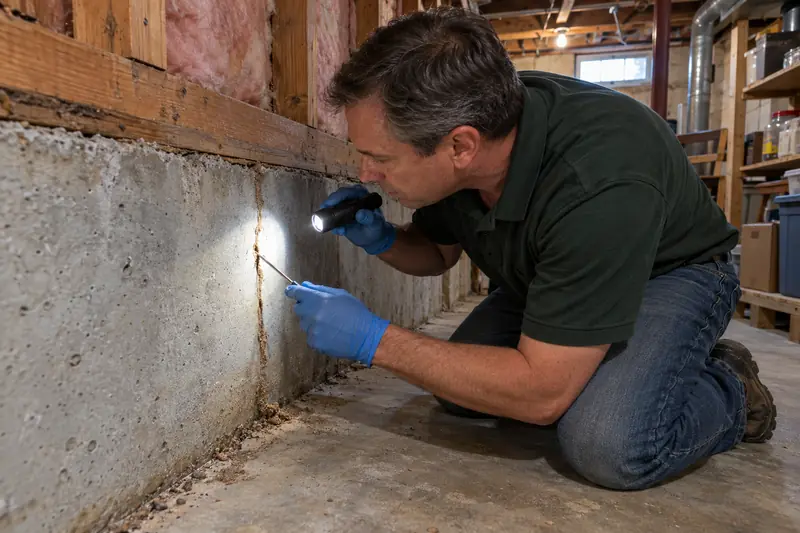
Termite swarms in Glen Ellyn usually happen on a warm day after rain in April or May, often inside the basement or near a window. The swarmers lose their wings fast, so a pile of small wings on a windowsill is a classic sign. Inside the wood, termites eat along the grain and leave mud-packed galleries, and the outside of the board can look fine for years.
Termites or flying ants
| Feature | Termite swarmer | Carpenter ant swarmer |
|---|---|---|
| Waist | Straight, thick waist | Narrow, pinched waist |
| Antennae | Straight | Bent at an elbow |
| Wings | Two pairs, equal length, fall off easily | Front wings longer than back wings |
| Color | Dark brown to black | Black or black and red, larger body |
| What it means | A colony in the soil feeding on wood in or near the house | A nest in damp or damaged wood |
What the technician checks and does
- 01
Inspect
The foundation, sill plate, porch, crawl space, basement framing, door frames and any wood touching soil. Mud tubes, damaged wood and swarm evidence are mapped.
- 02
Confirm the insect
Swarmers or workers are checked so you know it is termites and not carpenter ants.
- 03
Explain the options
A liquid soil treatment around the foundation, a bait system around the house, or a combination, with the reasons for each.
- 04
Treat and monitor
The treatment is installed, and bait systems are checked on a schedule.
Soil treatment or bait
A liquid soil treatment puts a treated zone in the soil along the foundation and under slabs where needed, so termites crossing it are killed or carry it back. A bait system places stations in the ground around the house; termites feed on the bait and take it to the colony. Some homes use both. The right choice depends on the foundation, porches, slabs, wells and how active the termites are.
Buying or selling in Glen Ellyn? Lenders often ask for a wood destroying insect inspection report. Ask about one when you call.
Damage repair
Treatment stops termites; it does not replace damaged wood. Weak sills, joists or porch framing need a carpenter, and the technician points out what should be looked at.
Does a termite swarm mean my house is damaged?
It means a colony is active in or near the house. Damage depends on how long they have been feeding. The inspection shows how far it goes.
Can I treat termites myself?
Store products do not reach the colony in the soil. A proper soil treatment or bait system needs equipment and access around the whole foundation.
How long does termite treatment take?
Most soil treatments take a day. Bait systems are installed in a few hours and then checked over the following months.
Found wings on the basement windowsill? Save a few in a sealed bag and call.
Call now(630) 000-0000Ant control in Glen Ellyn
Glen Ellyn is carpenter ant country. The old oaks and maples, wooden porches, decks and window frames give them damp wood to nest in, and they start showing up indoors in April. Smaller ants, mostly odorous house ants, trail into kitchens after spring rain.
Call about ants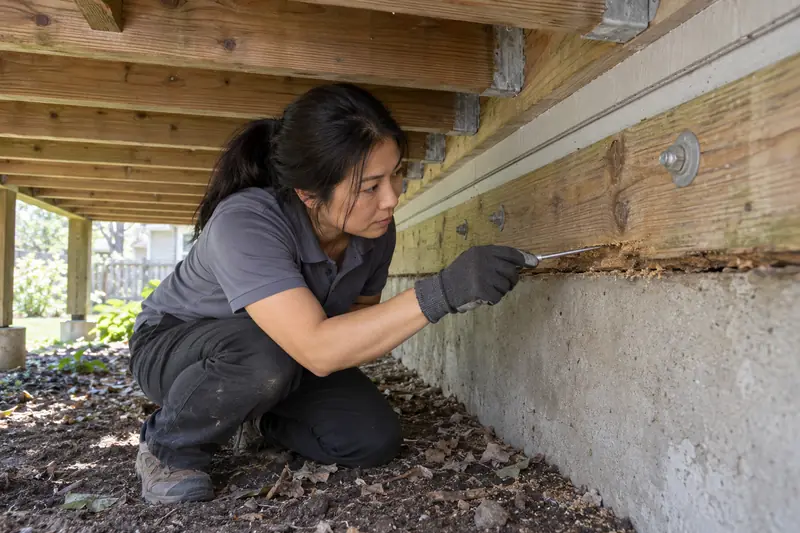
Carpenter ants do not eat wood. They tunnel through it to make nests, pushing out piles of fine sawdust called frass. A main nest often sits outdoors in a tree, stump or old landscape timber, with satellite nests in the house where wood stays damp: around a leaking window, under a bathroom, in a porch roof or a deck ledger.
Signs of carpenter ants
- Large black ants indoors Especially at night and in spring, often in the kitchen or bathroom.
- Sawdust piles Fine shavings mixed with insect parts below trim, window frames or in the basement.
- Winged ants Swarmers inside in spring, which means a nest inside the structure.
- Rustling A faint sound in walls or ceilings where a large nest is active.
How ant control is done
- 01
Identify the ant
Carpenter ants, odorous house ants and pavement ants need different treatments.
- 02
Find the nest
The technician follows trails at night or early morning and checks damp wood, porches and trees near the house.
- 03
Treat the nest and trails
Dust or foam into the nest gallery where it can be reached, non-repellent treatment at entry points and bait where they feed.
- 04
Fix the conditions
Branches touching the roof, wood touching soil and leaks that keep wood wet are pointed out.
Other ants you may see
- Odorous house ants Small brown ants that trail to sweets and water after rain. Bait works better than spray.
- Pavement ants Little piles of sand along driveways, patios and basement floor cracks.
- Field ants Mounds in the lawn and along the Prairie Path edges; they rarely come inside.
Do carpenter ants eat wood?
No, they hollow it out to nest. Over years a large colony can weaken porch framing, window frames or a deck.
Will spraying the ants I see help?
It kills a few workers and leaves the nest. Treating the nest and using bait where they feed is what ends it.
How do I know they are not termites?
Carpenter ants have a pinched waist, bent antennae and leave sawdust. Termites leave mud tubes and no sawdust. The technician confirms which.
Big black ants on the kitchen floor at night? Call and say where you see them.
Call now(630) 000-0000Rodent control in Glen Ellyn
House mice move into Glen Ellyn homes in October, when the nights drop below freezing, and they stay until spring if nothing stops them. Older homes with fieldstone or block foundations, window wells and gaps around utility lines let them in with little effort.
Call about mice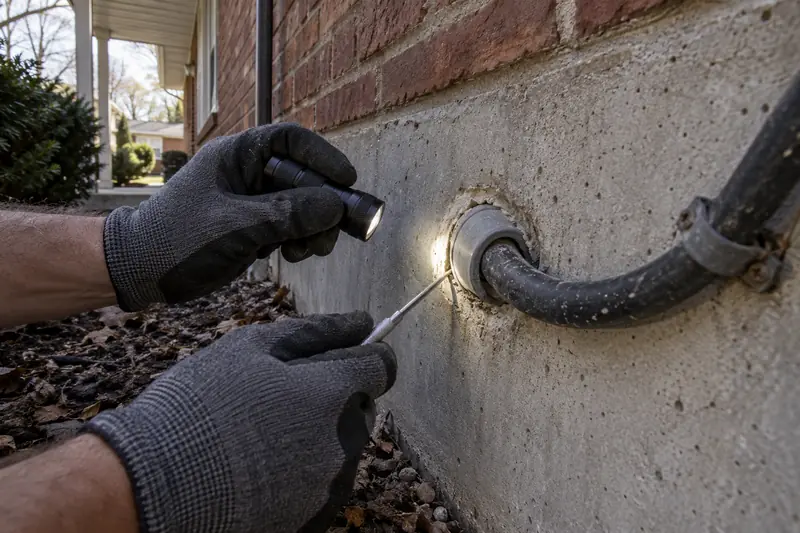
A mouse fits through a gap the size of a dime. They come in along the sill plate, around pipes and wires, under garage doors and through gaps where siding meets the foundation. Once inside they live in wall voids, behind kitchen cabinets and in basement storage. Norway rats are less common in houses but show up near alleys, restaurants and dumpsters downtown and in buildings near the train tracks.
Signs of mice
- Droppings Small, rice-sized droppings in drawers, behind the stove and in the basement.
- Sounds Scratching in walls and ceilings at night.
- Damage Chewed food packages, insulation or stored boxes.
- Nests Shredded paper, fabric or insulation in hidden corners.
How rodent control is done
- 01
Inspect the outside
The foundation, sill plate, window wells, utility entries, garage door seals, vents and the roof line.
- 02
Remove the mice inside
Traps are set along runways and checked on return visits until activity stops.
- 03
Seal the way in
Gaps are closed with steel wool, metal mesh, flashing and sealant that rodents cannot chew through.
- 04
Exterior stations where needed
Locked stations along the outside walls for homes near preserves, fields or alleys.
Sealing is what ends a mouse problem. Trapping without exclusion means a new set of mice every fall.
How long until the mice are gone?
Usually one to three weeks once the gaps are sealed and the traps are working. Return visits continue until there is no new activity.
How should I clean up droppings?
Do not sweep or vacuum them dry. Wet them with a disinfectant, wipe up with gloves on and bag the waste. Heavy contamination in insulation should be handled by a professional.
Is that a mouse or a squirrel in the attic?
Mice are active at night. Squirrels run in the attic early in the morning and late afternoon. Squirrels are wildlife and need a wildlife company.
Droppings behind the stove since the first frost? Call before the mice settle in for winter.
Call now(630) 000-0000Mosquito and tick control in Glen Ellyn
Mosquitoes breed in standing water around Lake Ellyn, the East Branch of the DuPage River, retention ponds and every clogged gutter in town. Ticks wait in tall grass and leaf litter along the Illinois Prairie Path and the edges of the forest preserves. Yard treatments target the places they actually live.
Call about mosquitoes or ticks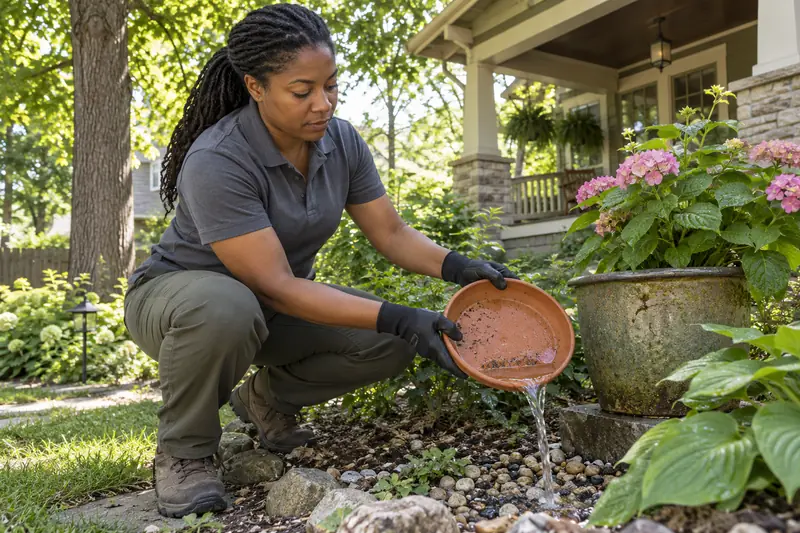
Adult mosquitoes spend the day resting in shade: under leaves, in dense shrubs, under decks and along fences. That is where the treatment goes. Ticks quest from tall grass and leaf litter at the edge of the lawn, so the border between the yard and the woods matters most.
What a yard treatment covers
- Resting areas Shrubs, the undersides of leaves, ivy, under decks and along fences.
- Breeding water Gutters, birdbaths, plant saucers, tarps and toys that hold water are pointed out; standing water that cannot be dumped can be treated.
- Tick zones The lawn edge, leaf litter, stone walls and the border with woods or the Prairie Path.
- Schedule Treatments every few weeks from late spring into early fall, when mosquitoes and ticks are active.
West Nile and Lyme
The DuPage County Health Department tests mosquitoes for West Nile virus every summer, and the county reports positive batches most years. Blacklegged ticks, the species that carries Lyme disease, are found in northern Illinois woods and edges. Yard treatment reduces the numbers around your house; it does not replace insect repellent, long sleeves on wooded trails or tick checks after a walk.
Will all the mosquitoes be gone?
No yard treatment removes every mosquito, because they fly in from outside. Regular treatment and removing standing water cut the numbers sharply around the house and deck.
Is it safe for kids and pets?
Kids and pets stay off treated areas until they dry, usually less than an hour. Flowering plants are avoided to protect bees.
Does the village spray for mosquitoes?
Area-wide programs work on public land and water. Your yard's shrubs, gutters and fence lines are still yours to manage.
Can't sit on the deck after 7pm? Call to set up a seasonal yard plan.
Call now(630) 000-0000Wasp and hornet removal in Glen Ellyn
By August, yellowjacket nests in Glen Ellyn lawns and wall voids can hold thousands of wasps, bald-faced hornets hang gray paper nests in the old trees, and paper wasps build under every porch ceiling. The technician identifies the nest and treats it safely, with the right gear.
Call about wasps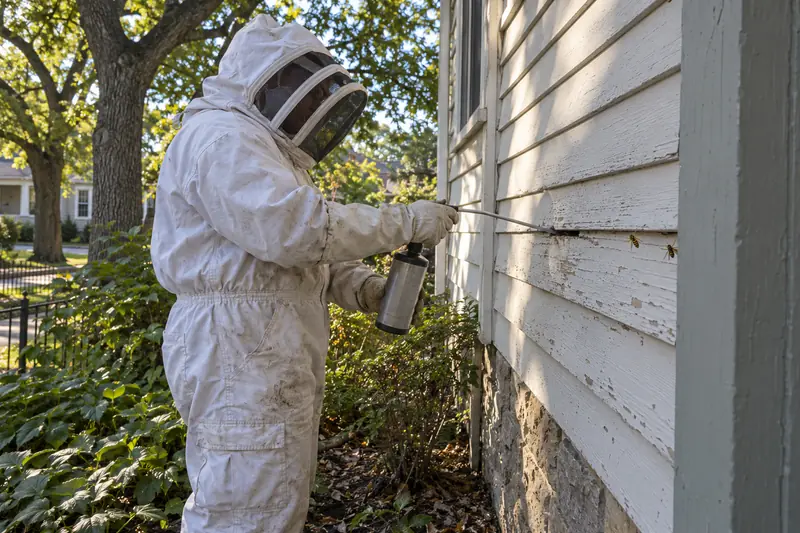
Yellowjackets are the dangerous ones. They nest in the ground, in wall voids and under decks, defend the nest hard and sting repeatedly. Mowing over a ground nest or sealing a wall hole from outside can send them into the house. Bald-faced hornets build football-sized nests in trees and shrubs. Paper wasps make small, open umbrella-shaped nests under eaves and railings and are calmer unless disturbed.
How a nest is handled
- 01
Identify the insect and the nest
Yellowjackets, hornets, paper wasps or honeybees each need a different approach.
- 02
Treat the nest
Dust or foam into ground and wall nests, direct treatment for exposed nests, timed for when the colony is inside.
- 03
Remove where reachable
Exposed nests are taken down once the colony is dead. Wall nests usually stay sealed in the wall.
- 04
Advise on the wall
Wall openings are sealed only after the colony is gone, so wasps are not forced indoors.
Honeybees
Honeybees are not treated here. A honeybee swarm or colony in a wall should go to a beekeeper or a bee removal service that can relocate it. If you are not sure whether you have bees or wasps, describe them on the call: honeybees are fuzzy and golden brown, yellowjackets are smooth and bright yellow and black.
Can I spray the nest myself?
Small paper wasp nests, maybe. Yellowjacket ground and wall nests are a different matter: disturbing them can bring hundreds of stinging wasps out at once.
When is the best time to treat?
Early in summer, when nests are small. Treatment is done when the colony is inside, usually early morning or evening.
How soon do the wasps stop?
Most activity stops within a day. Some returning foragers may circle for another day or two.
Yellowjackets coming out of the lawn or a wall? Do not plug the hole. Call first.
Call now(630) 000-0000Commercial pest control in Glen Ellyn
Restaurants on Main Street, shops along Crescent Boulevard, offices on Roosevelt Road, apartment buildings near the train station: each needs pest control that fits its hours and leaves a written record. Visits are planned around your schedule and logged every time.
Call about your business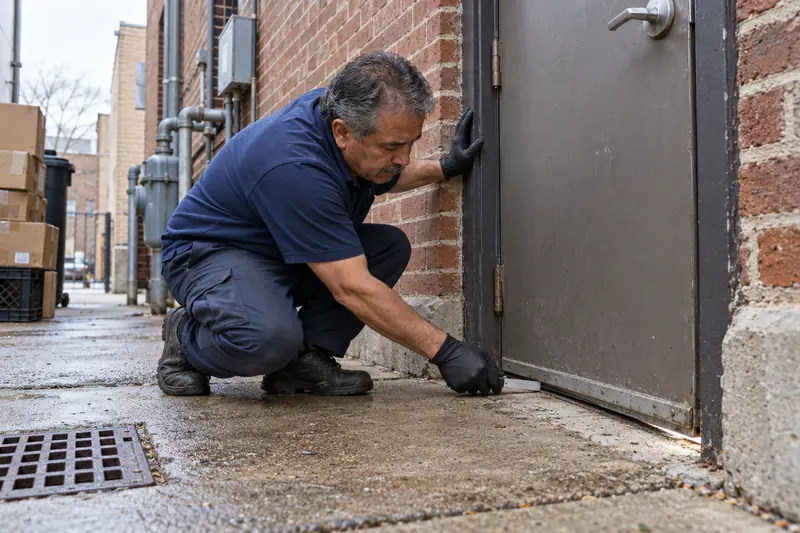
Downtown Glen Ellyn's older brick buildings share walls, basements and alleys, so mice and roaches travel between businesses. Restaurants and food shops need more frequent service than offices. Apartment buildings need common areas covered and a way to handle unit complaints quickly.
Who this is for
- Restaurants and food service Kitchen and storage service for roaches, flies and mice, timed outside service hours.
- Shops and offices Ants, mice and occasional invaders handled quietly, before opening or after close.
- Apartment and condo buildings Common areas, trash rooms, basements and units on request, with notices for residents.
- Schools, churches and clubs Scheduled service and records for boards and inspections.
How a commercial plan works
- 01
Site survey
Every room, outside wall, loading door and trash area is checked.
- 02
Written plan
What is treated, where stations go and how often visits happen.
- 03
Scheduled visits
Monthly or every other month, on your schedule.
- 04
Service log
Each visit records what was found, what was done and what to fix.
Can visits happen after hours?
Yes. Visits are scheduled around your hours, including early mornings and evenings.
Do I get a written service log?
Yes. Each visit is logged, which helps with health inspections and property records.
Running a restaurant or managing a building? Call to set up a site survey.
Call now(630) 000-0000What happens when you call from the first ring to follow-up
Five steps, the same for every service. Nothing is treated before you hear what was found and what it costs.
- 01
You call
A person answers and asks what you are seeing, where and for how long. A photo or a few insects in a sealed bag help.
- 02
The visit is set
You get a window that works for you. Businesses can book around opening hours.
- 03
Inspection
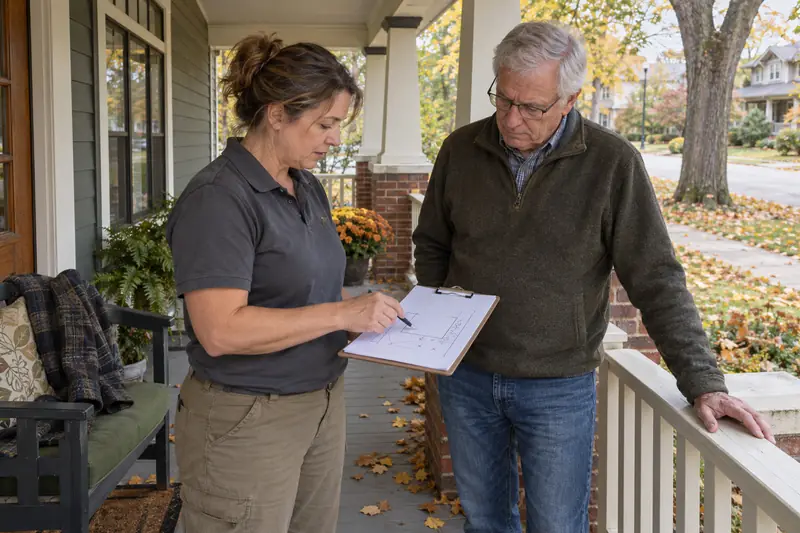
The technician walks the outside first, then the basement, kitchen, garage and attic as needed. The pest and the way in are found.
- 04
Options and price
You hear what was found, the treatment options and the cost for your home before any work starts.
- 05
Treatment and follow-up
The work is done where the pest lives and enters. Return visits are booked when the pest needs them, such as mice, termites on bait and wasp nests in walls.
Ready when you are. Call and the visit is set on the same call.
Call now(630) 000-0000How much does pest control cost in Glen Ellyn?
It depends on the pest and the house, so the price is given after the inspection and before any work starts.
A wasp nest under the eaves of a ranch is a short visit. Sealing every gap on a three-story Victorian with a fieldstone foundation is a different job. Instead of guessing on the phone, the exterminator looks first and prices the work for your home. You hear the number before anything is done, and you can say no.
What changes the price
- The pest Ants, spiders and paper wasps are usually one visit. Termites, mice and yellowjackets in a wall take more time and follow-up.
- How far it has spread One room or nest versus the whole basement, attic or several walls.
- Size and age of the house Square footage, stories, porches, additions and foundation type.
- Access Crawl spaces, finished basements, attics and tall eaves change how the work is done.
- Exclusion work Sealing gaps is priced by the number and type of openings.
- One-time or ongoing A plan spreads the cost across the year and includes follow-ups.
Termite inspection cost
A termite inspection for a concern or a home sale is priced when you call, based on the size of the house and whether a written report is needed. Treatment, if termites are found, is quoted separately after the inspection.
Comparing exterminators? Ask each one what the inspection found, where the treatment goes, how many visits are included and what happens if the pest comes back.
Want a number for your house? Call. The inspection comes first, then the price.
Call now(630) 000-0000The Glen Ellyn pest calendar season by season
Northern Illinois has four real seasons, and each one brings its own pests. This is what local exterminators see across the year.
March and April
Ants wake up and trail into kitchens as the ground thaws. Overwintering lady beetles and stink bugs crawl out of walls on sunny days.
April to June
Eastern subterranean termites swarm on warm days after rain. Carpenter ants swarm and start nesting in porches, decks and window frames.
June to September
Mosquitoes breed in gutters, ponds and the river; DuPage County tracks West Nile virus. Ticks wait along trails and lawn edges.
August and September
Yellowjacket nests reach their largest and most aggressive. Bald-faced hornet nests show up in trees once leaves start to drop.
Late September and October
Boxelder bugs, lady beetles and stink bugs gather on warm walls before moving inside. Crickets and spiders head for basements.
November to March
Mice push into basements, walls and garages as the nights freeze. Indoor pests like silverfish and centipedes stay active in damp basements.
Neighborhoods and towns served around Glen Ellyn
Exterminators work all of Glen Ellyn and the DuPage County towns around it. Say your street or nearest cross street when you call.
Downtown and Lake Ellyn
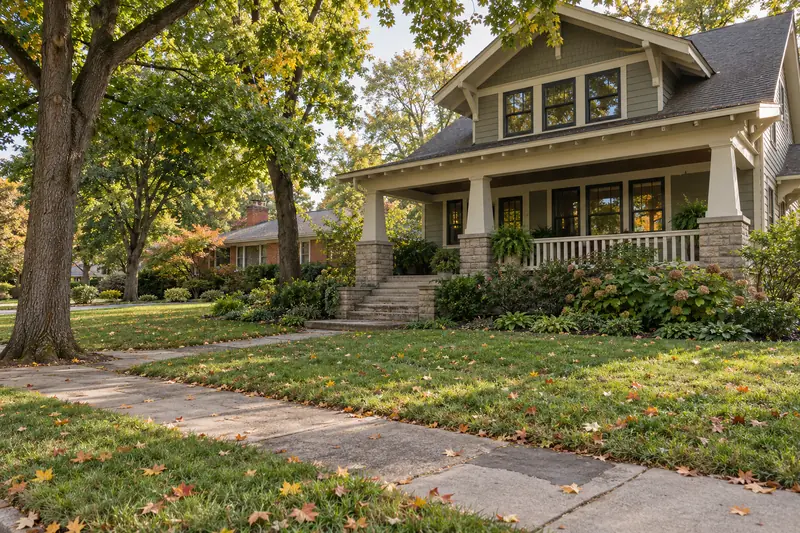
Victorian and Craftsman homes with deep porches and old trees: carpenter ants, termites and mice.
North of Roosevelt Road
Ranches, split-levels and newer infill: ants, mice and fall invaders.
Near the Prairie Path
Homes backing onto the trail: ticks, mosquitoes and mice.
Stacy's Corners and the north side
Mid-century homes and wooded lots: carpenter ants, wasps and rodents.
Near College of DuPage
Apartments, townhomes and offices: ants, mice and roaches.
Wheaton
Older homes near downtown and newer subdivisions: termites, carpenter ants and mice.
Lombard
Brick ranches and bungalows: mice, ants and roaches.
Glendale Heights
Townhomes and apartments: roaches, mice and ants.
Carol Stream and Bloomingdale
Subdivisions with retention ponds: mosquitoes, ants and wasps.
Winfield and Warrenville
Wooded lots near the river and preserves: ticks, mosquitoes and rodents.
Downers Grove and Lisle
Older homes and wooded neighborhoods: carpenter ants, termites and mice.
Villa Park and Elmhurst
Bungalows and older brick homes: mice, ants and roaches.
West Chicago and Addison
Homes and businesses: rodents, roaches and commercial service.
Naperville and Oak Brook
Larger homes and offices: termites, ants and commercial service.
ZIP codes served
- Glen Ellyn, IL
- 60137, 60138
- Wheaton, IL
- 60187, 60189
- Lombard, IL
- 60148
- Glendale Heights, IL
- 60139
- Carol Stream, IL
- 60188, 60197, 60199
- Winfield, IL
- 60190
- Warrenville, IL
- 60555
- Downers Grove, IL
- 60515, 60516
- Villa Park, IL
- 60181
- Lisle, IL
- 60532
- West Chicago, IL
- 60185, 60186
- Bloomingdale, IL
- 60108
- Addison, IL
- 60101
- Elmhurst, IL
- 60126
- Naperville, IL
- 60540, 60563, 60564, 60565, 60566, 60567
- Oak Brook, IL
- 60523
Before the visit preparing the house, kids and pets
Most visits need very little prep. A few need more, and you get a short list when the visit is booked.
For any visit
- Clear access Make the basement walls, the area under sinks, the attic hatch and the garage reachable.
- Pets inside or away Keep pets indoors while the outside is treated and off treated areas until they dry.
- Note what you saw Where, when and how many. A photo or a few insects in a sealed bag help.
For termites and wasps
- Termites Clear stored items from along the basement walls so the foundation and sill can be inspected.
- Wasps and yellowjackets Keep people and pets away from the nest, and do not plug the entry hole.
Kids, pets and the yard
Treatments go where pests live: in cracks, voids, along the foundation, in sealed stations and in the shade where mosquitoes rest. They are not sprayed across floors, beds or play areas. Kids and pets stay off treated areas outdoors until they dry. If anyone in the house is pregnant, has asthma or a chemical sensitivity, say so on the call and the plan is adjusted. You are told what product is used and where, and you can ask for the label.
How calls are handled and who does the work
Pest Control Glen Ellyn answers the phone and sets up the visit. The work is done by an independent local pest control company that serves your part of DuPage County.
A person answers
During call hours a person takes the call and asks what matters: what, where and how long.
The right technician
The visit goes to a local exterminator who works Glen Ellyn and handles the pest you have.
Inspection before treatment
Nothing is treated before the pest and the way in are found.
The price first
You hear the cost for your home before work starts.
Follow-up booked
Mice, termite bait and wall nests get return visits scheduled before the technician leaves.
Straight answers
Wildlife, honeybees and wood repair are outside pest control, and you are told who handles them.
What is not handled here
Squirrels, raccoons, bats, opossums, skunks and other wildlife need a wildlife removal company. Honeybee swarms and colonies go to a beekeeper or bee removal service. Rotted sills, joists and porch framing after termite or carpenter ant damage need a carpenter. Ask on the call and you will be pointed to the right kind of company.
- Squirrels and raccoons
- Bats
- Honeybee colonies
- Wood repair
Pest control questions from Glen Ellyn homeowners
What pests are most common in Glen Ellyn?
Carpenter ants, house mice, eastern subterranean termites, odorous house ants, yellowjackets, mosquitoes, ticks and the fall invaders: boxelder bugs, lady beetles and stink bugs.
How much does an exterminator cost in Glen Ellyn?
It depends on the pest, how far it has spread and the house. The technician inspects and gives the price before any work starts. See what changes the price.
Are termites a problem in Illinois?
Yes. Eastern subterranean termites are active across northern Illinois, including DuPage County. Older homes with porches and wood near the soil are most at risk.
Do you do termite inspections for home sales?
Yes. Ask about a wood destroying insect inspection report when you call, and say whether a lender needs it.
Are big black ants as bad as termites?
Carpenter ants hollow out wood rather than eat it, and damage builds more slowly, but a large colony can still weaken a porch or window frame over the years.
Why do I suddenly have ants in the kitchen?
Spring rain floods their nests and sends them indoors for food and water. Bait where they feed and a perimeter treatment stop them.
Is it worth paying for pest control?
For one-off nuisances, maybe not. For termites, carpenter ants in the structure, mice in the walls and yellowjackets, a professional finds the source and the way in, which store products cannot.
Is the treatment safe for kids and pets?
Treatments go into cracks, voids, the foundation line and sealed stations, not onto floors or bedding. Kids and pets stay off treated areas until they dry.
How soon can someone come out?
Call during call hours and the visit is set on the same call. The first open window depends on the day and the season.
Do you handle squirrels or raccoons?
No. Those are wildlife and need a wildlife company. You will be pointed to the right kind of business.
Do you remove honeybees?
No. Honeybees should be relocated by a beekeeper or bee removal service. Wasps, hornets and yellowjackets are handled.
Do you treat businesses?
Yes. Restaurants, shops, offices and apartment buildings get scheduled visits and a written service log.
Which towns do you serve?
Glen Ellyn, Wheaton, Lombard, Glendale Heights, Carol Stream, Winfield, Warrenville, Downers Grove, Villa Park, Lisle, West Chicago, Bloomingdale, Addison, Elmhurst, Naperville and Oak Brook.
What should I do before the visit?
Clear access to the basement walls, under the sinks, the attic hatch and the garage, keep pets inside, and note where and when you see the pest.
Call for pest control in Glen Ellyn
Tell the person who answers what you are seeing, where in the house and how long it has been going on. They set up the inspection, and you get the price before any work starts.
Calls are answered Monday to Friday 8am to 7pm and Saturday 9am to 3pm, Central time. After hours, request a callback and the call comes when the lines open.
Call now
(630) 000-0000Calls answered Mon to Fri 8am to 7pm, Sat 9am to 3pm (Central time)
- Mon to Fri
- 8am to 7pm
- Sat
- 9am to 3pm
- Sun
- Closed
A person answers, asks what you are seeing and where, then sets up a visit with an independent local exterminator who works your part of DuPage County.
Good boundaries. Better living.
Call now(630) 000-0000Mon to Fri 8am to 7pm, Sat 9am to 3pm (Central time). A person answers, asks what you are seeing and where, then sets up a visit with an independent local exterminator who works your part of DuPage County.