Termite Treatment and Inspection in Glen Ellyn, IL
Wings on the basement windowsill in May, a thin mud tube on the foundation. Save a few wings in a sealed bag and call (630) 000-0000. A local technician confirms whether it is termites or carpenter ants, maps the activity and quotes the treatment first.
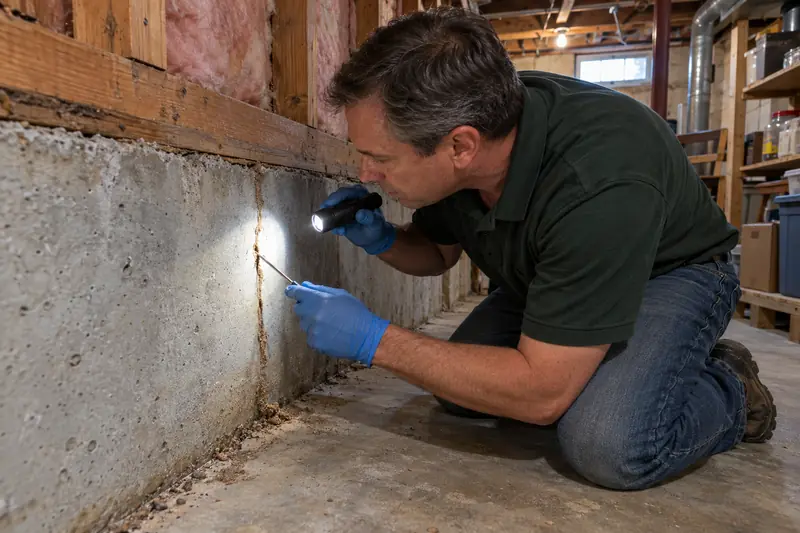
Eastern subterranean termites are active across DuPage County. They live in the soil and reach a house through the foundation, a porch, an addition or any wood that touches the ground. The first job is confirming them, because carpenter ants swarm in the same weeks.
Termite swarms in Glen Ellyn usually happen on a warm day after rain in April or May, often inside the basement or near a window. The swarmers lose their wings fast, so a pile of small wings on a windowsill is a classic sign. Inside the wood, termites eat along the grain and leave mud-packed galleries, and the outside of the board can look fine for years.
Termites or flying ants
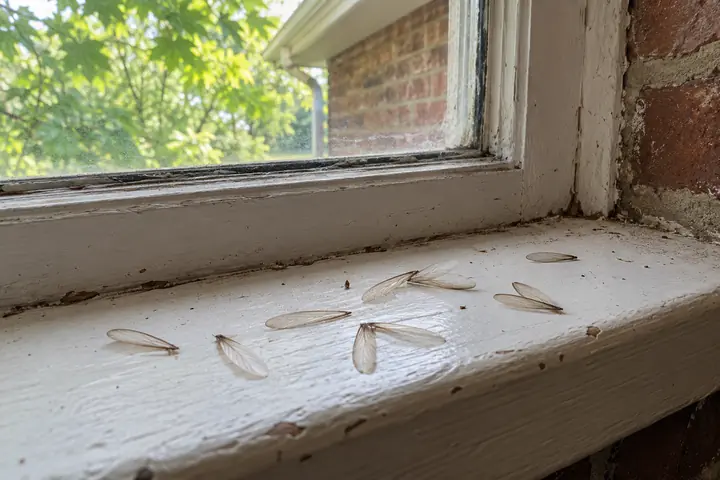
| Feature | Termite swarmer | Carpenter ant swarmer |
|---|---|---|
| Waist | Straight, thick waist | Narrow, pinched waist |
| Antennae | Straight | Bent at an elbow |
| Wings | Two pairs, equal length, fall off easily | Front wings longer than back wings |
| Color | Dark brown to black | Black or black and red, larger body |
| What it means | A colony in the soil feeding on wood in or near the house | A nest in damp or damaged wood |
If the insects are carpenter ants, the nest is found and treated instead; that work is on ant control.
Signs of termites
- Swarmers or wings Indoors in April or May, often near a basement window or a wall.
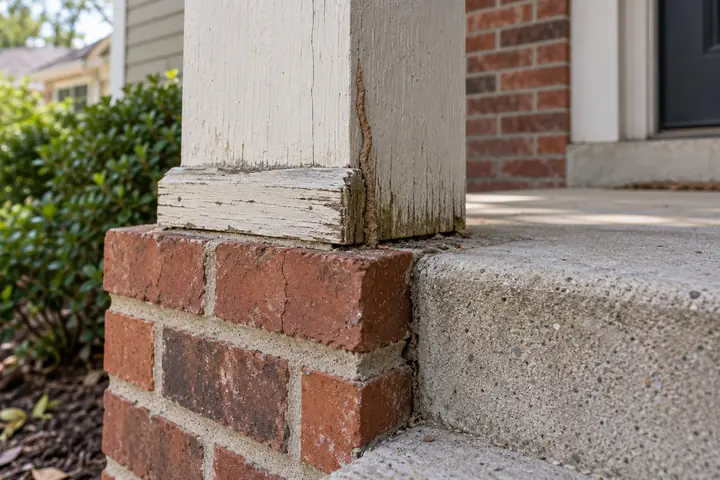
- Mud tubes Thin brown tunnels on the foundation, a pier or a porch post.
- Hollow or soft wood A screwdriver pushes into a sill or a trim board easily.
- Blistered paint or bubbled drywall Over wood that termites are feeding behind.
- Mud in cracks Where termites have sealed a gap they are using.
How termites reach Glen Ellyn houses
Porches and additions
Front porches and later additions often sit on their own footings with wood close to the soil, and the joint where they meet the house is a common way in.
Fieldstone and block foundations
Mortar gaps in fieldstone walls and the hollow cores of block foundations let termites travel up to the sill plate out of sight.
Mulch, firewood and wood touching soil
Decades of mulch piled against the walls, firewood stacked on the ground and wood steps or trim touching the soil all give termites an easy start.
Finished basements
Paneling and drywall over the foundation hide mud tubes until the damage shows.
How termite treatment is done
- 01
Inspect
The foundation, sill plate, porch, crawl space, basement framing, door frames and any wood touching soil. Mud tubes, damaged wood and swarm evidence are mapped.
- 02
Confirm the insect
Swarmers or workers are checked so you know it is termites and not carpenter ants.
- 03
Explain the options
A liquid soil treatment, a bait system or a combination, with the reasons for each.
- 04
Treat
The treatment is installed around the foundation and under slabs where needed.
- 05
Monitor
Bait systems are checked on a schedule; soil treatments are reinspected.
Soil treatment or bait
| Approach | How it works | A good fit when |
|---|---|---|
| Liquid soil treatment | A treated zone in the soil along the foundation and under slabs | Activity is heavy and the foundation is accessible |
| Bait system | Stations in the ground that termites feed on and share | Drilling is hard, or wells and slabs limit soil treatment |
| Both | Soil treatment at active areas, bait around the rest | Large or complicated foundations |
The right choice depends on the foundation, porches, slabs and wells and how active the termites are.
Termite inspections for home sales
When a house in Glen Ellyn is sold, the lender often asks for a wood destroying insect inspection, usually written on the standard NPMA-33 report. The inspection looks for termites and other wood destroying insects and notes any damage and conditions that invite them. Ask whether your lender needs one when you call.
Buying or selling in Glen Ellyn? Ask about a wood destroying insect inspection report when you call.
Damage repair
Treatment stops termites; it does not replace damaged wood. Weak sills, joists or porch framing need a carpenter, and the technician points out what should be looked at.
What changes the price of termite treatment
- The size of the foundation And the porches, slabs and additions.
- Soil treatment or bait And how much drilling the slabs need.
- Monitoring Whether ongoing checks are part of the plan.
You hear the price before any treatment. Every other service is on pest control in Glen Ellyn.
Keeping termites away
- Pull mulch back from the foundation Keep a few inches of bare soil or stone.
- Keep wood off the soil Steps, trim, posts and firewood.
- Fix leaks and downspouts Damp soil at the foundation draws termites.
- Watch for swarmers each spring And save a few if you see them.
Termite control questions
Does a termite swarm mean my house is damaged?
It means a colony is active in or near the house. Damage depends on how long they have been feeding. The inspection shows how far it goes.
Can I treat termites myself?
Store products do not reach the colony in the soil. A proper soil treatment or bait system needs equipment and access around the whole foundation.
How long does termite treatment take?
Most soil treatments take a day. Bait systems are installed in a few hours and then checked over the following months.
Are termites common in Glen Ellyn?
Eastern subterranean termites are active across DuPage County, and older houses are more at risk.
Do I need to leave the house?
Not for a soil treatment or a bait system. Pets and children stay away from the areas being worked on.
Good boundaries. Better living.
Call now(630) 000-0000Mon to Fri 8am to 7pm, Sat 9am to 3pm (Central time). A person answers, asks what you are seeing and where, then sets up a visit with an independent local exterminator who works your part of DuPage County.